Across the steel industry, there is a clear consensus among engineers, fabricators and suppliers that both mild steel round bar and bright steel bar are essential materials - each excelling in different applications. Professionals value mild steel round bar for its strength, versatility and reliability in fabrication, while bright steel bar is widely recognised for its precision, consistency and superior surface finish.
Although both products originate from the same mild steel base material, the way they are processed creates important differences that directly affect performance.
For customers ordering steel from Austen Knapman, especially cut-to-size, these differences are not just technical details, they influence how easily the material can be worked, how it performs in use and ultimately the success of the project. Choosing incorrectly can lead to issues such as poor tolerances, distortion during machining or unnecessary additional costs.
Mild steel round bar is often the preferred option for general fabrication and structural applications, offering excellent weldability and cost efficiency. Bright steel bar, by contrast, is typically selected for precision engineering work where accuracy and finish are critical. Understanding where each material excels helps avoid common pitfalls.
This helpful guide breaks down the key differences in a clear and practical way, helping Austen Knapman customers make informed decisions. Whether you are working on a one-off DIY job or sourcing materials for a larger project, knowing which bar to choose will save time, reduce waste and deliver better results.
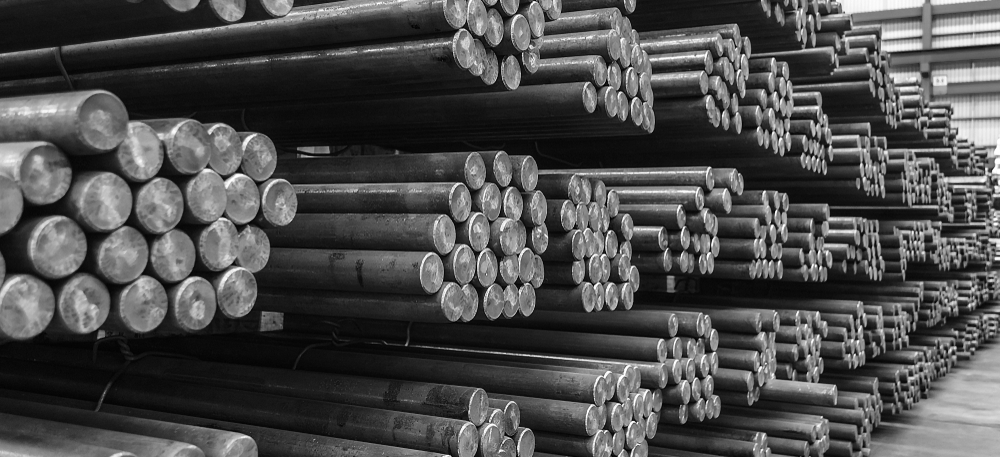
Mild Steel Round Bar is a hot rolled product made from low carbon steel, typically containing between 0.05 percent and 0.25 percent carbon. Hot rolling involves heating the steel to a very high temperature and then passing it through rollers. The end result is a blend of strength, durability and excellent weldability, making it one of the most widely used steel products in the UK. It is important to note that the hot rolling process gives it a slightly rough surface finish and looser tolerances compared to more refined steels. This makes it highly suitable for structural and general fabrication work where precision is less critical.
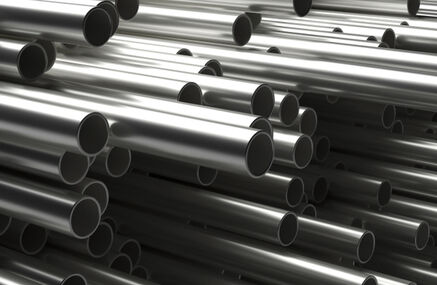
Bright Mild Steel Round Bar, often referred to as bright bar, is produced by drawing hot rolled steel through a die or by turning and polishing it. This process improves dimensional accuracy and creates a smooth, clean surface finish. The result is a more precise and visually appealing product that is well-suited to engineering and machining applications. However, the process also introduces internal stresses, which can affect performance during heavy fabrication or welding. Bright bar is typically used where accuracy and finish are critical.
The primary difference between mild steel round bar and bright steel bar lies in how they are manufactured. Hot rolled mild steel is shaped at high temperatures, which makes it easier to produce but results in a scaled, less uniform finish. Bright steel, on the other hand, undergoes additional processing at room temperature, which refines its shape and surface. This extra processing step increases accuracy but also adds cost. The choice between the two often comes down to whether finish or economy is more of an important priority for you.
While both materials are strong and reliable, their performance characteristics differ slightly due to their production methods. Mild steel round bar generally has more consistent internal structure, making it better suited to heavy fabrication and welding. Bright steel bar, although dimensionally accurate, can contain residual stresses that may lead to distortion during machining or welding. Tolerances are also a key consideration, especially in engineering applications. Choosing the right material depends on how critical precision and stability are to your project.
Selecting between mild steel round bar and bright steel bar ultimately depends on the application. For structural work, general fabrication or projects where the steel will be cut and welded, mild steel round bar is usually the best choice. For precision components, machining work or applications where appearance matters, bright bar is often preferred. Understanding how each material will be used is key to making the right decision, and you'll benefit hugely from choosing the correct product at the ordering stage, especially when using our cut-to-size services.
Choosing between mild steel round bar and bright steel bar comes down to how the material will be used in your project. If your work involves welding, structural strength or general fabrication, mild steel round bar is usually the more practical and cost effective option. It is more forgiving to work with and performs reliably under heat and stress. On the other hand, if your project requires tight tolerances, a clean finish or precision machining, bright steel bar is often the better choice. The smoother surface and improved accuracy make it ideal for engineering components where detail matters.
Both mild steel round bar and bright steel bar are excellent materials, but they serve different purposes. One is built for strength and versatility, the other for precision and finish. Understanding these differences ensures you get the best performance from your material and avoid unnecessary complications.