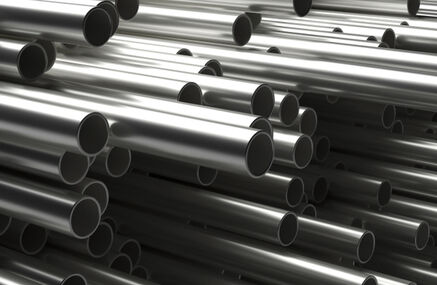

Mild steel is one of the most widely used materials in modern construction, engineering and fabrication. Its reliability, affordability and strength make it the foundation of everything from roofing frameworks and gates to heavy-duty machinery and architectural structures. For buyers, understanding what mild steel is and how to select the right type for a specific application can save both time and money, while ensuring vital long-term performance.
At its core, mild steel is a low-carbon steel alloy containing only a small percentage of carbon, typically between 0.05% and 0.25%. This limited carbon content gives it a unique balance of malleability and strength. Unlike stainless steel, it does not contain significant chromium or nickel, so while it lacks corrosion resistance, it is considerably cheaper and easier to work with. It is easy to cut, shape, weld and drill, making it one of the most versatile materials available to the construction and roofing sectors.
The mild steel industry underpins the UK’s manufacturing and building economy. It supports everything from structural frameworks and machinery to reinforcement components and sheet metal work. Roofing contractors, engineers and fabricators rely on its predictability and performance. The material’s ductility and weldability allow for intricate fabrication, ensuring every beam, plate or section can be customised to suit individual project specifications.
Without the dependable properties of mild steel, construction and roofing projects would face several challenges. Alternative materials may be more expensive, more difficult to machine, or less structurally consistent. Inadequate substitutes can lead to instability, increased maintenance costs and premature structural fatigue. Using a material as proven as Austen Knapman's mild steel not only secures performance but ensures compliance with British Standards across a wide range of varied applications.
Mild steel, often referred to as low-carbon steel, is mainly comprised of iron with a small percentage of carbon. This reduced carbon content allows the metal to remain soft enough for shaping yet strong enough for heavy-duty applications. It can be hot-rolled, cold-rolled or galvanised, depending on the required finish and purpose. Hot-rolled mild steel is ideal for structural and general fabrication, while cold-rolled provides tighter tolerances and a smoother surface for aesthetic or precision uses. Galvanised mild steel offers corrosion protection for outdoor environments; its low cost, combined with ease of fabrication, has made it a mainstay across construction, automotive and roofing industries.
The chemical makeup of mild steel is simple but critical. Alongside its dominant iron base, carbon is the key strengthening element. Additional trace elements such as manganese, silicon, sulphur and phosphorus are introduced in controlled amounts to improve toughness, deoxidisation and machinability. The result is a balanced material that performs consistently under both static and dynamic loads.
With a density of approximately 7.85 g/cm³ and a melting point between 1,425°C and 1,530°C, mild steel offers excellent heat resistance for welding and forming. Its magnetic properties make it useful for motor housings and fixtures, while its low carbon content allows for smooth cutting and forming without fracturing. However, its open ferritic structure also means it readily reacts with oxygen and moisture, making protective coatings essential for outdoor longevity.
Mild steel is available in multiple grades, each engineered for specific mechanical performance and certified under British and European standards. Knowing the difference helps buyers choose the right product for their needs. For example, EN1A is a free-cutting mild steel that's perfect for precision machining and turned components. EN3B is a general-purpose engineering steel used in bars and plates.
Structural projects typically use S275 for standard load-bearing applications and S355 for higher-strength structural work, such as heavy frameworks or beams. CR4, a cold-rolled mild steel, is commonly used in manufacturing panels, automotive parts and appliances where a smooth finish is essential. When selecting a grade, always consider the tensile strength, yield capacity and environmental exposure.
Mild steel’s versatility lies in the range of forms it can be supplied in. At Austen Knapman, buyers can choose from an extensive catalogue of profiles to suit specific design or fabrication tasks. Box sections (square, rectangular or circular hollow sections) are ideal for frameworks, gates, railings and machinery supports. Flat bars offer flexibility for bracing, repair and reinforcement work. Angle bar provides excellent rigidity for corner joints in roof trusses and building frames, while channels and beams are essential for structural skeletons and load-bearing systems. Sheet and plate products are used for cladding, panelling, base plates and general fabrication work.
Always check for BS EN compliance, consistent wall thickness and smooth cut edges to ensure strength and ease of assembly. Opt for cut-to-size service from suppliers like Austen Knapman to reduce waste and improve fabrication efficiency.
Mild steel is used across virtually every industrial sector due to its adaptability, cost-effectiveness and availability. Its strength-to-weight ratio and ease of fabrication make it a vital material for structural, mechanical and architectural projects alike. In construction, it forms beams, columns, roofing supports and reinforcement bars that maintain the integrity of buildings and infrastructure. In fabrication, it’s used for machinery, railings, gates, shelving and fixtures. The automotive industry relies on it for chassis components, brackets and bodywork. In agriculture and domestic settings, it’s found in fencing, sheds, workbenches and tool racks. Its uniform performance and ease of maintenance make mild steel a trusted choice wherever reliability and affordability are essential.
Pro Tip: Match grade and finish to environment - e.g., uncoated S275 for interiors or galvanised box sections for outdoor use.
Every material has its strengths and weaknesses, and understanding both sides of mild steel allows buyers to make confident, informed decisions. Mild steel’s greatest advantage lies in its versatility and accessibility. It’s one of the easiest metals to cut, shape and weld, meaning even complex designs can be achieved with standard workshop tools. Its combination of tensile strength and ductility makes it suitable for everything from domestic repairs to large-scale structural projects. Because it’s widely produced, it’s also one of the most affordable metals available in the UK, ensuring excellent value for money across construction, manufacturing and DIY markets.
However, mild steel’s low carbon content does mean it lacks natural corrosion resistance. If used outdoors or in damp environments without protection, it will rust over time. The key to longevity is applying appropriate coatings such as galvanising, painting or powder coating. When correctly finished and maintained, mild steel can last for decades, providing unbeatable strength and reliability at a low cost.
Advantages:
Limitations:
One of the main reasons mild steel is so popular is how easy it is to fabricate. With the right approach and tools, anyone from professional engineers to experienced DIYers can achieve professional-grade results. Cutting and drilling are straightforward with high-speed or carbide tools, while its forgiving composition allows for clean, consistent welds without pre-heat or post-heat treatment. Preparation and safety remain crucial - clean surfaces, secure clamping and proper ventilation will all affect the finished quality. Whether you’re constructing a frame, fabricating gates or repairing machinery, these practical guidelines will help you get the best out of your material.
Best-Practice Guidelines:
Because mild steel has limited corrosion resistance, surface protection is essential to preserve its strength and appearance. The right finish not only prevents rust but can also enhance visual appeal and simplify maintenance. Indoor projects may only need a coat of paint, while outdoor or coastal applications demand robust finishes such as powder coating or galvanising. Preparing the surface properly before coating - by degreasing, sanding or shot-blasting - ensures long-lasting adhesion and performance. With the correct protection, mild steel can withstand decades of service in even the harshest environments.
Common Protection Methods:
Sustainability has become a central consideration in construction and manufacturing - and mild steel definitely excels in these areas. One of the world’s most recyclable materials, it is capable of being melted down and re-formed indefinitely without losing strength or integrity. Choosing mild steel supports a circular economy by reducing waste and the need for new raw materials. The UK steel industry has made major strides in energy efficiency and carbon reduction, meaning today’s steel is cleaner and greener than ever before. By purchasing from responsible suppliers, buyers not only get a reliable material but also contribute to more sustainable building practices.
Environmental Benefits:
Selecting the right mild steel starts with understanding the needs of your project. Think about the load, exposure conditions, budget and finish you require. A roof frame, for example, demands a corrosion-protected structural grade such as galvanised S275, while an indoor bracket may only need a basic cold-rolled bar. Always buy from a reputable supplier - such as Austen Knapman - that provides cut-to-size services to ensure materials arrive ready for use.
Choose the length, thickness, diameter and quantity needed for your next project. Enter the dimensions you require for your mild steel product of choice to receive a free on-screen quote for your order. We’ll then deliver it cut to size to suit your requirements.
Buying Checklist: