
When it comes to buying the right materials for a metalworking project, it's important to know that not all steels are created equal. Two of the most common types - mild steel and bright mild steel - might sound similar, but they serve different purposes and perform differently depending on your chosen application. Understanding the key differences between mild steel and bright mild steel is crucial for achieving the best results in fabrication, engineering, manufacturing and much more...
While both are forms of low carbon steel, the properties and best-use scenarios of mild steel and bright mild steel are significantly different. Making the right choice between these types of mild steel ensures your project delivers on quality, longevity and cost-efficiency. In this guide, Austen Knapman breaks down the key differences, helping you to decide when mild steel or bright mild steel is the best option for your next job.
One of the most obvious differences between mild steel and bright mild steel is the surface finish. Mild steel typically has a rougher, greyer finish due to its hot rolling process which involves the steel being shaped at high temperatures. This process requires fewer steps and is more cost-effective, creating a scale formation on the metal surface during cooling. Mild steel may require finishing but it's typically more affordable, workable and practical for a huge number of general-use applications
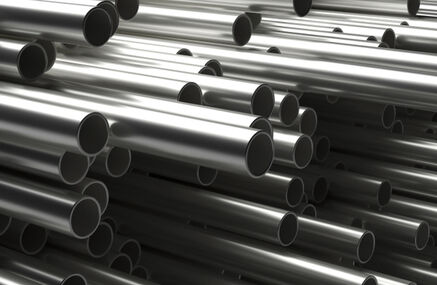
In contrast, bright mild steel goes through a cold drawing, or cold rolling process, resulting in a smooth, "bright" and shiny surface that's ideal for visually-focused or decorative metalwork. The surface of bright mild steel is free from mill scale and has a clean, consistent appearance that usually doesn't require any extra finishing work. Bright mild steel is often described as shiny or “bright” due to the more refined manufacturing process, making it ideal for components that are going to be visible in your project, or require a more precise fit.
In metalworking, dimensional accuracy refers to how close a part is to its intended size, while tolerances define how much variation is acceptable. Both are essential for ensuring parts fit together, work reliably, and don’t fail under stress.
The difference in dimensional accuracy and tolerances between mild steel (hot-rolled) and bright mild steel (cold-finished) comes down to how each metal is processed. The manufacturing method directly affects the precision, surface finish and dimensional consistency of the final product.
Bright mild steel is manufactured to tighter dimensional tolerances compared to regular mild steel. This makes it perfect for applications where very precise measurements are critical, such as in precision engineering, automotive components or machining operations. Mild steel, with its wider tolerances, is ideal for wide-ranging, large-scale structural work and general fabrication jobs where workability and lower production costs are key considerations.
Mild steel offers excellent machinability thanks to its highly formable, malleable and ductile qualities that allow it to retain structural integrity even when it is shaped or bent significantly without breaking or cracking. It's ductility is determined by the lower carbon content which makes the metal comparatively softer and easy to work, drill, cut to size and weld.
Bright mild steel shines in applications demanding high precision and a superior surface finish. Its smooth, cold-finished surface ensures exceptional dimensional accuracy, making machining setups quicker and more consistent. The uniformity allows for clean, precise cuts and reduces the need for extensive post-machining finishing. This slightly enhanced hardness provides excellent strength while still maintaining great machinability for components where fine tolerances and polished surfaces are essential.
At Austen Knapman, we offer a wide range of mild steel, and a bright mild steel product, all available cut-to-size and ready to order. All you need to do is simply input your required measurements online and our Cut To Size Calculator will give you an instant price, allowing you to purchase only the exact materials you need for your next project.
From mild steel flat, round, angle and square bars to cold rolled and hot rolled sheeting, browse mild steel products for any professional or DIY job today. Our mild steel can be purchased quickly and delivered directly to your address of choice.

Understanding the key differences between mild steel and bright mild steel is vital for anyone working with metal - whether you're a professional engineer, fabricator or DIY enthusiast. While both types offer strength and versatility, they serve different roles in the metalworking world:
Knowing the strengths and limitations of each will help you get the most out of your materials, reduce waste, and deliver better results on every project.
When it comes to steel selection, understanding the differences between mild steel and bright mild steel can make all the difference in achieving the best results - both in terms of performance and cost-efficiency. While they share a similar low-carbon composition, their processing methods, mechanical properties and ideal applications are worlds apart.
Mild steel - with its excellent ductility, ease of welding and widespread availability - is the go-to material for structural work, general fabrication, construction frameworks and projects where surface finish isn’t a priority. Its affordability and ease of use make it ideal for large-scale builds or welded assemblies.
On the other hand, bright mild steel is engineered for precision. Thanks to its smooth surface finish, tighter tolerances and improved machinability, it’s best suited for components that need accurate dimensions and a clean appearance - such as shafts, pins, spindles, fasteners and machined parts. It’s especially valuable in the automotive, engineering and manufacturing sectors where performance and presentation go hand-in-hand.
Ultimately, choosing the right steel for the right job ensures you maximise efficiency, safety and value. Consider your project’s requirements for strength, finish, fabrication method and accuracy - and simply let that guide whether mild steel or bright mild steel is the better fit. The right choice of material will not only improve the outcome, but also reduce re-work, tool wear, and long-term costs.